

Posted on: March 30, 2026
In 2025, governments across our countries of operation deepened their commitment to digitalizing their community health systems and accelerated national scale-up of the electronic Community Health Information System (eCHIS).
Living Goods worked with ministries of health to strengthen the governance, infrastructure, and technical foundations needed to sustain these systems for the long term. eCHIS transforms how community health workers (CHWs) deliver care by enabling real-time data capture, giving decision-makers the visibility they need to identify gaps, allocate resources, and respond faster to community needs.
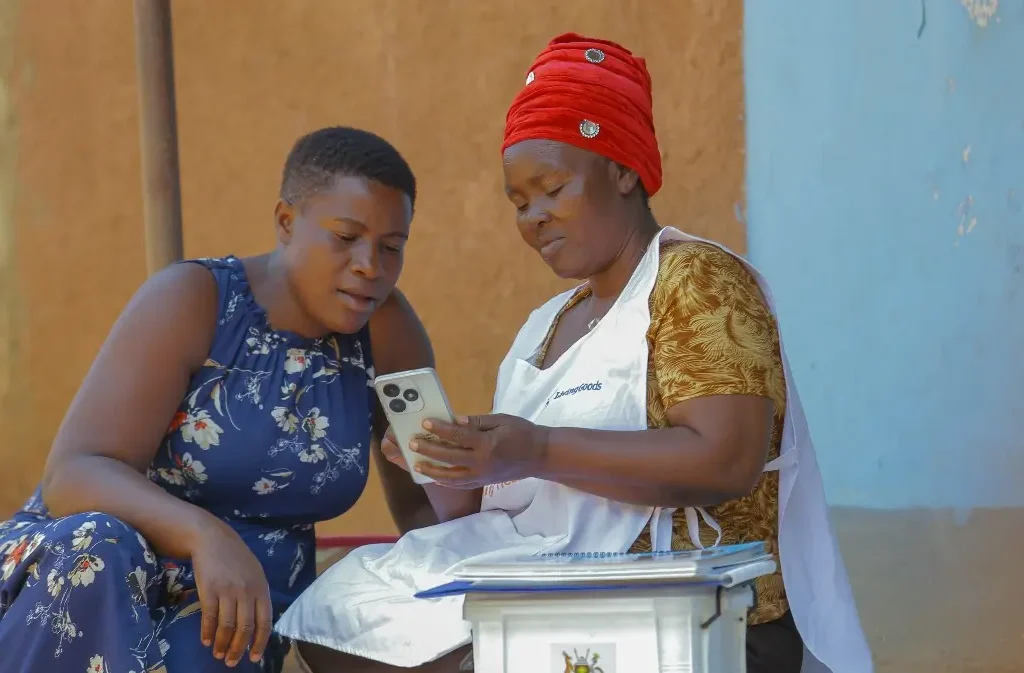
But digital success depends on the systems behind it. Rapid scale of eCHIS exposed critical system gaps. In Kenya, eCHIS outages led to nationwide reporting downtime, forcing CHWs in some areas to return to paper tools. Large volumes of data were lost. The scale up had outpaced infrastructure and national deployment readiness.
As our Chief Digital Health Officer, Kanishka Katara put it: “The biggest bottleneck isn’t the hardware. It is governance—who owns the architecture, who maintains it, who pays for upgrades, and who sets the standards.” This catalyzed renewed government focus on sustainable scaling, including stronger hosting, clearer governance, and dedicated system ownership.
In Uganda and Burkina Faso, rapid expansion revealed similar risks—from staffing and approval bottlenecks to gaps in system readiness. We worked with these governments to build the structures needed to manage and sustain digital systems at scale.
In Kenya, we provided coordination support to stabilize data pipelines and prevent further data loss. We also helped establish the country’s first eCHIS Project Management Unit (PMU) within the Ministry of Health to help the government govern and manage eCHIS effectively and sustainably. We replicated this approach in Burkina Faso by establishing a PMU and supporting the government to develop and finalize an updated, costed three-year eCHIS roadmap.
Most critically, we supported the development, costing, and validation of the 2025–2029 Digital Health Strategic Plan. These are foundational guiding frameworks needed to make eCHIS systems work effectively at scale.
In Uganda, we demonstrated the risks of rapid scale without readiness and supported approval of national Data Quality Assurance guidelines. Progress is a process. In 2026 and beyond, Living Goods will continue supporting governments to build strong foundations, clarify roles, strengthen governance, and build digital health systems that are both fit for purpose and for the future.
Share:


