
Posted on: December 1, 2025
In Wakiso District, Uganda the future of community health is taking shape, one digital data point at a time.
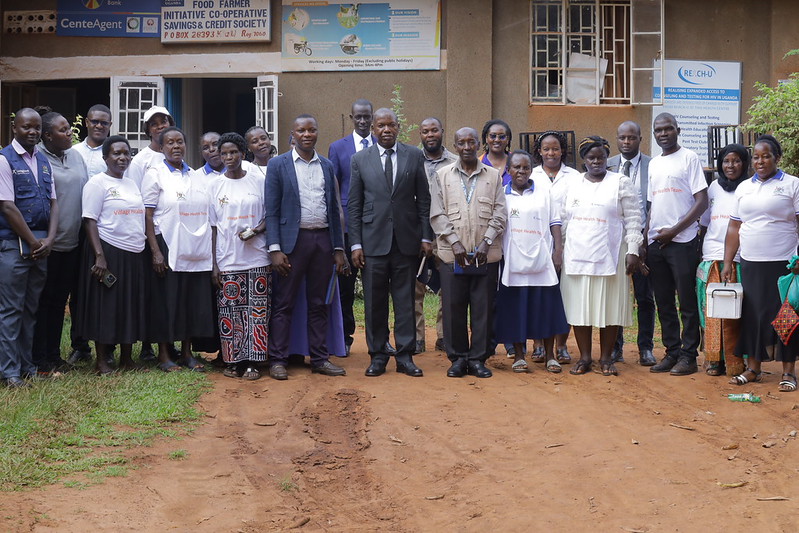
Last week, the Ministry of Health (MoH), Living Goods, and partners visited communities across the district for a field immersion to witness first-hand how the electronic Community Health Information System (eCHIS) is reshaping primary healthcare delivery. What they saw was a story of transformation, of technology unlocking the full potential of Village Health Teams (VHTs), and of frontline workers delivering care with sharper precision, faster response, and renewed confidence.
For years, Wakiso struggled with low and inconsistent reporting. Paper-based tools meant that only 45% of CHW cases were captured, leaving gaps that affected planning, referrals, and maternal and child health outcomes. But today, thanks to the rollout of eCHIS and the strong partnership behind it, the change is unmistakable.
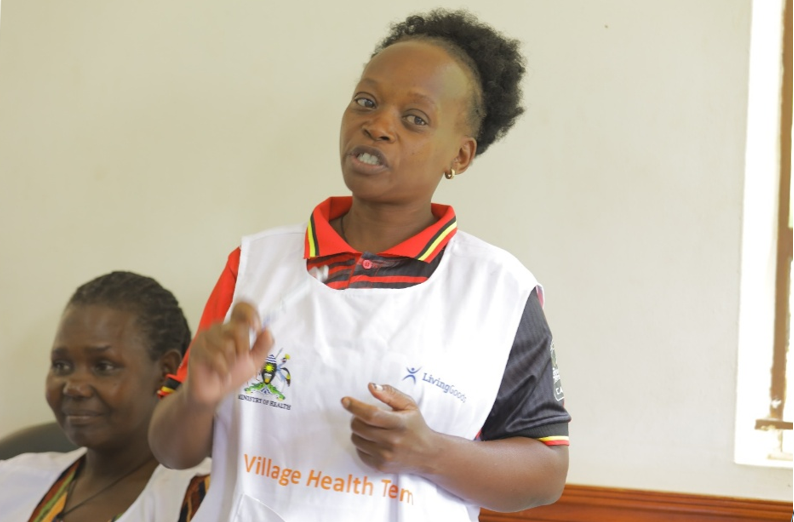
“Before eCHIS, I would sometimes miss follow-ups for pregnant mothers or children due for immunisation… but now the system reminds me ahead of time. It has made our work easier and the care we give more reliable,”
— Joyce Nankabirwa, Community Health Worker, Wakiso
Joyce’s story mirrors the reality across the district. With smartphones and tablets in their hands, CHWs can now capture near real-time data, identify danger signs earlier, and support timely referrals. Mothers who once delivered at home are now being reached sooner. Children who risked missing immunizations are being followed up consistently. The ripple effects are undeniable.
Wakiso’s District Biostatistician, Frank Kakande, shared compelling evidence of the shift. In just one quarter, reporting rates soared from 45% to 87.5%, and over 465,000 households have been digitally registered. Tools supported by Living Goods, UNICEF, PSI, and CDFU have strengthened antenatal care follow-up, boosted family planning uptake, and enhanced community-based surveillance.
“With eCHIS, our CHWs no longer guess— they act on real-time data. That is why today we rarely see mothers delivering from villages or turning to traditional birth attendants.”
— Bonny Natukunda, Wakiso District Health Educator
The MoH delegation, led by Dr. Bagala John Paul, emphasized the significance of these gains.
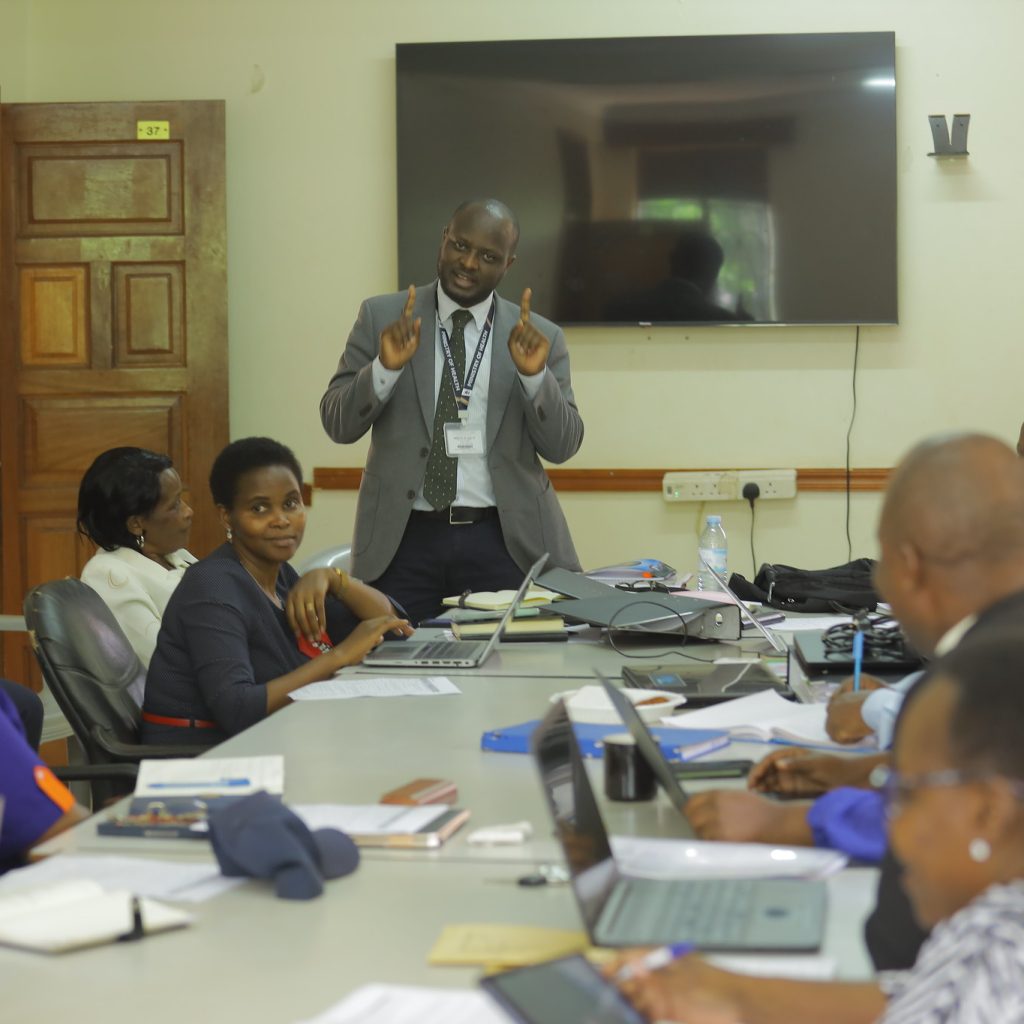
“Community health in Wakiso stands strong because our CHWs stand strong… We celebrate them not just for what they do, but for what they make possible.”
— Dr. Bagala John Paul, Ag. Assistant Commissioner for Reproductive and Infant Health, MoH
Dr. Bagala noted that Wakiso—one of Uganda’s most populous districts—offers valuable insights into how eCHIS can drive maternal, newborn, and child health improvements at scale.
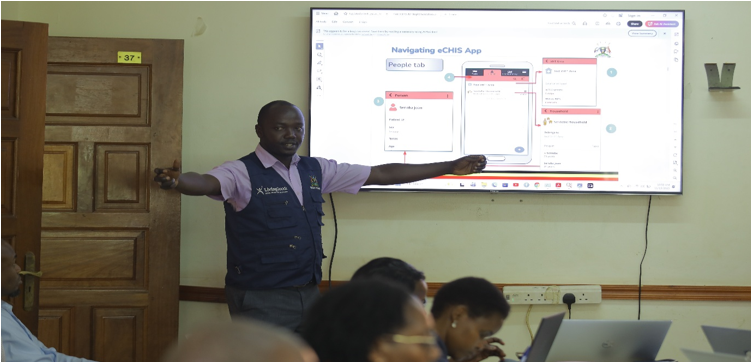
During the visit, Living Goods Regional Digital Health Officer John Lembuzi walked participants through the implementation journey—highlighting successes, lessons, and the next steps to further strengthen digital health innovations. He underscored the importance of CHW mentorship, regular supervision, and data-driven decision-making as the backbone of effective eCHIS use.
Living Goods’ contribution to the digitization of community health was evident throughout the visit. The organization supports more than 1,006 VHTs across 18 sub-counties in Wakiso—equipping them with digital tools, building their skills, and championing integration across service areas.
The day ended with a shared sense of momentum: that Uganda’s pathway to Universal Health Coverage becomes stronger when frontline workers are empowered with the tools they need to deliver high-quality, integrated care.
And in Wakiso, that transformation is already underway—one digital interaction, one home visit, and one saved life at a time.
Share:


