

Posted on: April 6, 2026
In Kiébé, a village in Manga District, Burkina Faso, accessing healthcare is not always easy. Distance to health facilities and financial constraints mean that even a minor illness in a child can quickly become a serious concern. In this context, community health workers (CHWs) make all the difference bringing care closer to families and providing reassurance when it’s needed most.
Like many parents in her community, Alimata, a mother of two, depends on her CHW for guidance and support when her children fall ill. “My child had a cold. I went to see our CHW who takes care of our children when they are unwell. If she can’t manage a case, she’d refer us to the hospital,” narrated Alimata, a mother of two. For her, this first point of contact has become a lifeline.
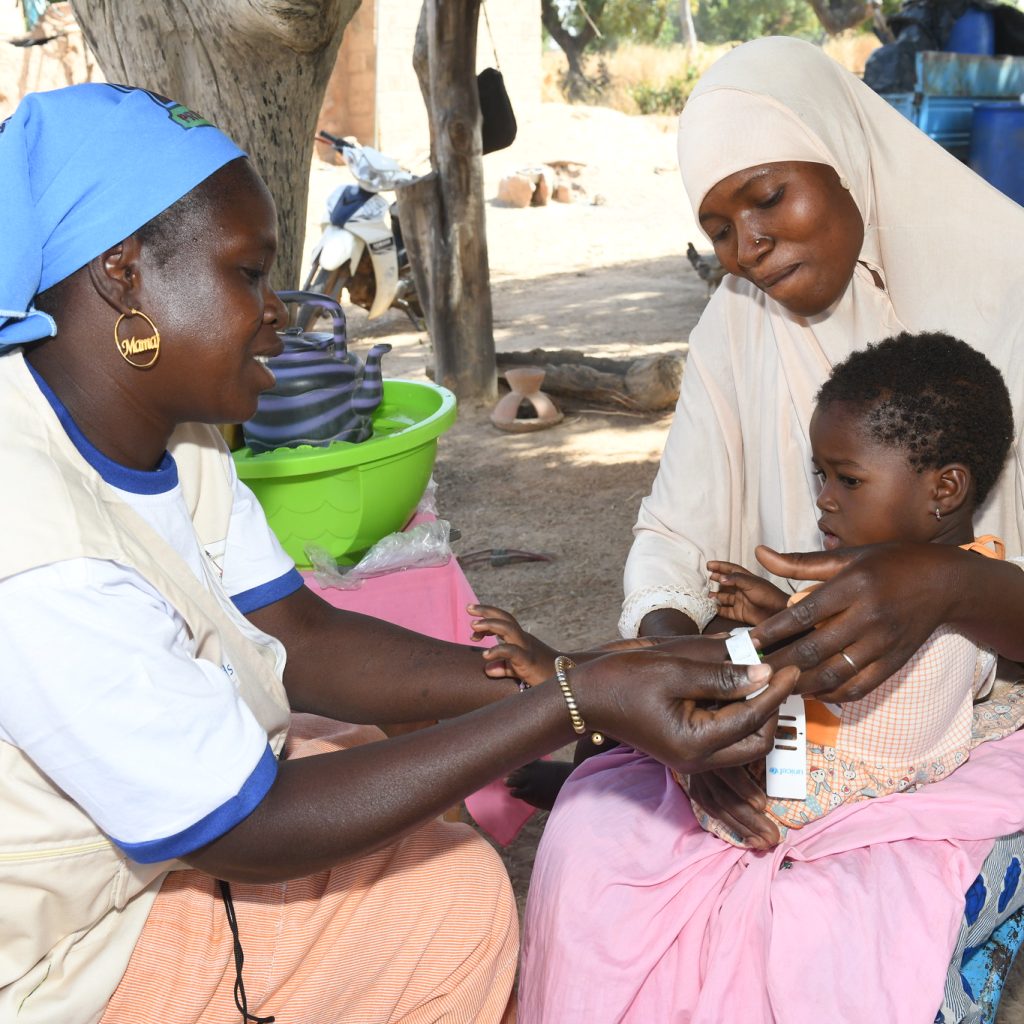
Through regular follow-ups, Alimata has received treatment and referrals for both her children, as well as advice on how to keep her household healthier. “When children fall sick and we don’t have the means to go to the hospital, they (CHWs) help us treat the illnesses. Without them, it would be very difficult for us.”
Alimata’s story is a powerful reminder that community health workers are more than a first point of care—they are a vital link in the health system. But to sustain and scale this impact, CHWs must be supported with the training, tools, supervision, and financing they need to do their jobs effectively.
Investing in community health workers means ensuring that families no matter where they live can access timely, trusted care. Because when CHWs are supported, stronger, more resilient health systems become possible for everyone.
Share:


