

Posted on: June 19, 2026
“The data tells us what is happening. The people behind the data tell us why.”
That reflection, shared by our Senior Manager, Digital Health Kenya, Evelyne Wekesa during a recent performance acceleration field visit in western Kenya, captures an important lesson about strengthening community health systems. Data can show where progress is being made and where challenges remain. But understanding what drives those results requires listening to the people closest to the work.
Over the past quarter, Living Goods and county health teams visited community health units across Busia, Vihiga, Bungoma, and Kisumu to understand what was driving differences in performance. Through conversations with Community Health Promoters (CHPs), Community Health Assistants (CHAs), facility teams, and county leaders, one theme emerged consistently: performance is rarely a technology problem. More often, it is a story of people, processes, and accountability.
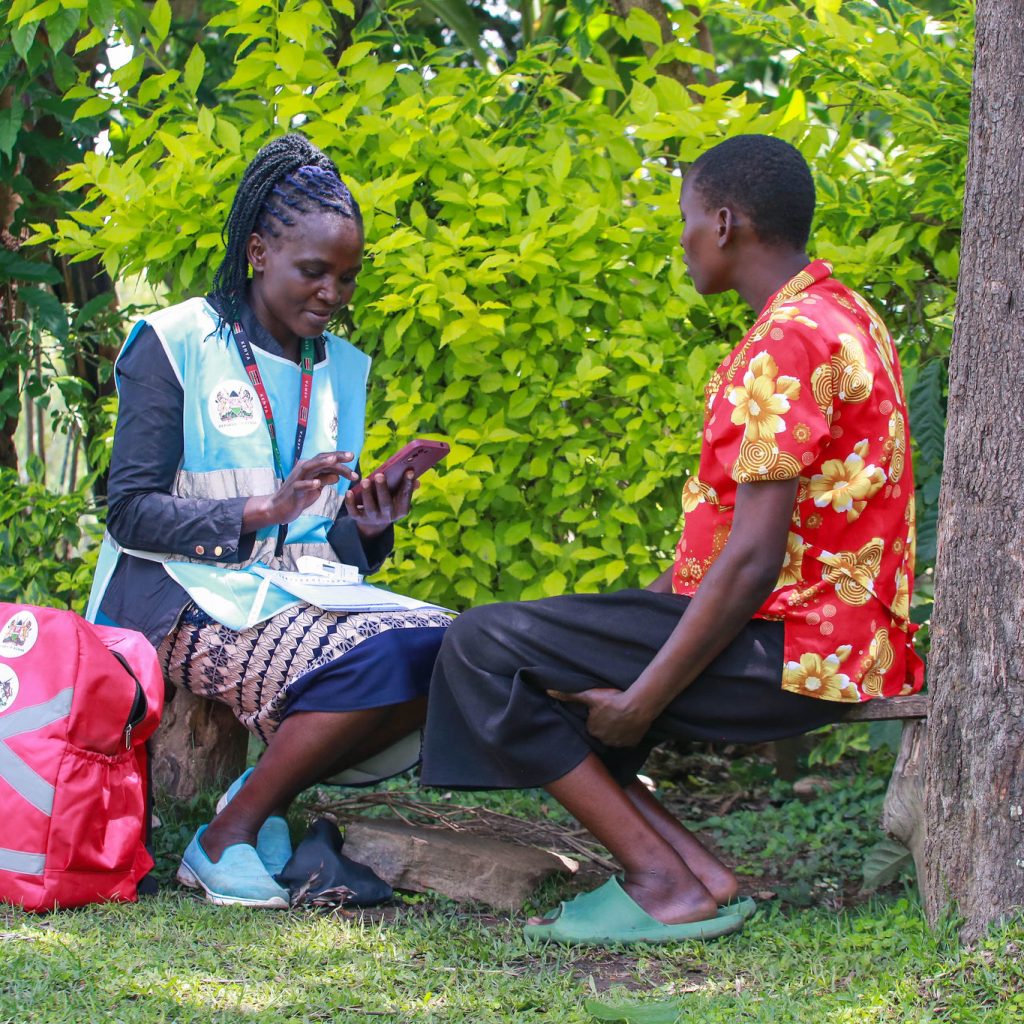
In Kisumu, one CHP’s performance stood out. He had registered more pregnancies than anyone else in his unit. Asked about his success, he smiled and replied, “I just ask the right questions.”
As the conversation continued, it became clear that his results were not the product of chance. They reflected something less visible but equally important: trust. Through strong listening skills, meaningful conversations, and consistent engagement with families, he had built relationships that enabled him to identify and support expectant mothers earlier.
His performance data told one story. His connection to the community told another.
Across the four counties, teams observed similar patterns. High-performing community health units consistently demonstrated structured work planning, active use of data, supportive supervision, and strong engagement between CHPs and CHAs. Health workers understood how their daily actions contributed to larger health goals.
At the same time, the visits revealed challenges that continue to affect performance. Commodity stockouts disrupted service delivery. Delayed stipend payments affected motivation. Some household coverage figures masked gaps in reaching mobile populations. And in many areas, supervision remained reactive rather than targeted and data-driven.
These lessons are helping shape the next phase of efforts to strengthen community health performance. They are also reflected in what is happening in Bungoma County.
Last year, Bungoma County and Living Goods entered into a partnership focused on improving primary healthcare, with a particular emphasis on maternal and child health. Through the refined approach to our work with government, the partnership has invested in strengthening supervision, building frontline capabilities, improving data use, and supporting county-led performance management.
Early results suggest the approach is making a difference.
In Webuye West Sub-County, health teams are reporting improvements in antenatal and postnatal care attendance, increased uptake of skilled deliveries, stronger supervision practices, and a more motivated community health workforce.
For Humphrey Nyongesa, the Webuye West Sub-County Community Health Coordinator, the changes are visible in both the data and the daily work of frontline teams.

“With close supervision of the Community Health Promoters by the Community Health Assistants, our target is to ensure that Webuye West does not experience any maternal or newborn deaths,” he says.
The sub-county has also recorded reductions in common childhood illnesses associated with under-five mortality, including malaria, diarrhoea, and pneumonia. Nyongesa attributes much of this progress to continuous coaching, training, and stronger accountability systems that help health workers perform at their best.
One of the most significant changes has been the introduction of tools that allow supervisors to track performance more effectively and provide targeted support where it is needed most. Rather than relying on assumptions, managers can now identify gaps quickly and respond with action.
For Nyongesa, the investment has created a new sense of responsibility across the system.
“I strongly believe that the county and Living Goods have given us everything. It is now their turn to ask us why we are not performing,” he says.
His words point to a broader shift taking place across Kenya’s community health system: accountability is no longer viewed as a burden, but as a pathway to better outcomes.
The experiences from Kisumu and Bungoma reinforce a lesson that extends far beyond any single county. Sustainable improvements in maternal and child health do not come from technology alone. They happen when health workers are equipped with the skills, support, supervision, and motivation needed to serve their communities effectively.
Share:


