

Posted on: July 17, 2026
In the quiet village of Teso North in Kenya’s Busia County, a gentle conversation unfolds beneath the shade of a tree. It is a familiar scene, one that plays out in communities every day but for Cynthia Atyang’ and her young son, Austin, it marks the difference between a frightening illness and a healthy recovery.

Community Health Promoter Winnie Juma has returned to Cynthia’s home for a follow-up visit. Sitting together with Cynthia’s two children—three-year-old Austin and his 17-month-old sibling—the conversation centers on one question: How is Austin feeling today?
Just days earlier, the situation had been very different.
“When I visited last week, Austin had a high fever, a runny nose, and had stopped eating,” Winnie recalls. “This wasn’t a routine household visit. I knew he needed immediate attention.”
As part of her training through Living Goods, Winnie assessed Austin using the skills and tools she carries into every household. Although his malaria test was negative, his symptoms pointed to a child who required urgent medical care.
Rather than waiting for his condition to worsen, Winnie referred the family immediately to Teso North Sub-County Hospital.
“I went to the hospital that same day,” Cynthia says. “When we arrived, the doctors diagnosed Austin with severe malaria. He was admitted for three days.”
Today, Austin is back home—smiling, eating well, and playing once again with his older sister.
His recovery is a reminder that timely community-based care can make all the difference, particularly in malaria-endemic regions like Busia County, where children under five remain among the most vulnerable.
But Winnie’s visit does not end with Austin’s recovery.
When Cynthia asks how her son could have contracted malaria despite sleeping under an insecticide-treated mosquito net every night, Winnie uses the opportunity to reinforce practical prevention measures.
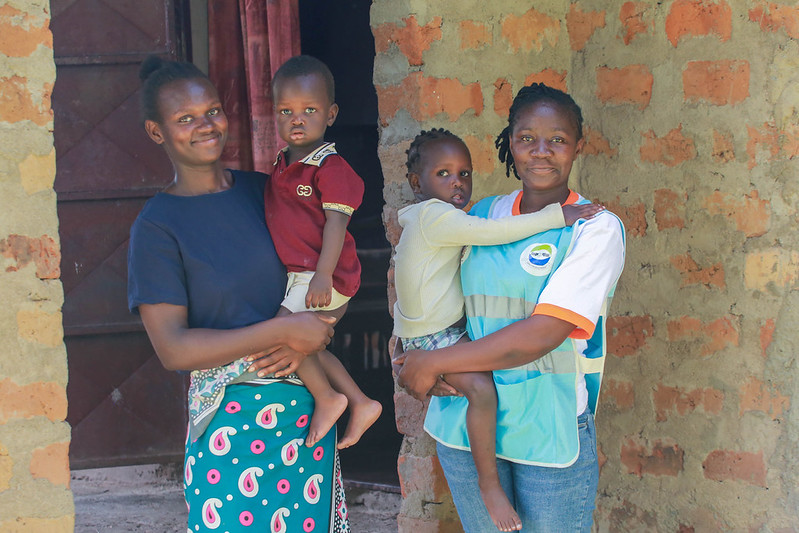
She explains that in malaria-endemic areas, mosquitoes often bite before families retire for the night, making environmental management just as important as bed nets. Together, they discuss clearing bushes around the home, draining stagnant water where mosquitoes breed, and reducing other potential breeding sites.
Before leaving, Winnie reminds Cynthia about another important layer of protection.
“Austin will soon be due for his third malaria vaccine,” she says. “Please make sure he receives it. The vaccine helps protect children from severe malaria, one of the leading causes of illness and death among young children in Kenya.”
Across Kenya, Community Health Promoters are helping families detect illness early, provide trusted health advice, and connect children to lifesaving care before it is too late. Their work extends beyond treating disease—it builds trust, empowers caregivers with knowledge, and helps ensure that every child has the opportunity to grow up healthy.
For Cynthia, that support arrived exactly when her family needed it most.
Because one timely home visit didn’t just change Austin’s week—it may have saved his life.
Tags:
Share:


