
Posted on: November 24, 2025
In Kologom, a rural community in the Oubri region of Burkina Faso, malaria remains one of the biggest public health challenges. Every rainy season brings its share of fevers and worries for families. Yet, amid these difficult realities, community health workers like Fatimata Ouédraogo stand strong, protecting lives, one patient at a time.
“During the malaria season, I receive up to 40 patients a day; sometimes more when the rains are heavy,” she explains.
Armed with her mobile phone, Fatimata can now follow up with her patients more efficiently. “Before, we used to write everything by hand. It was slow and exhausting. Now, I can track patients, report cases, and save precious time…sometimes, even lives,” she says.
One of the most memorable moments was when her own five-year-old son fell seriously ill with malaria. “One night, he woke up with a high fever. He tested positive for malaria. His father wanted to take him to the health center, but it was too far, and the road was impassable. I used the medicines I had on hand, and by God’s grace, he recovered.”
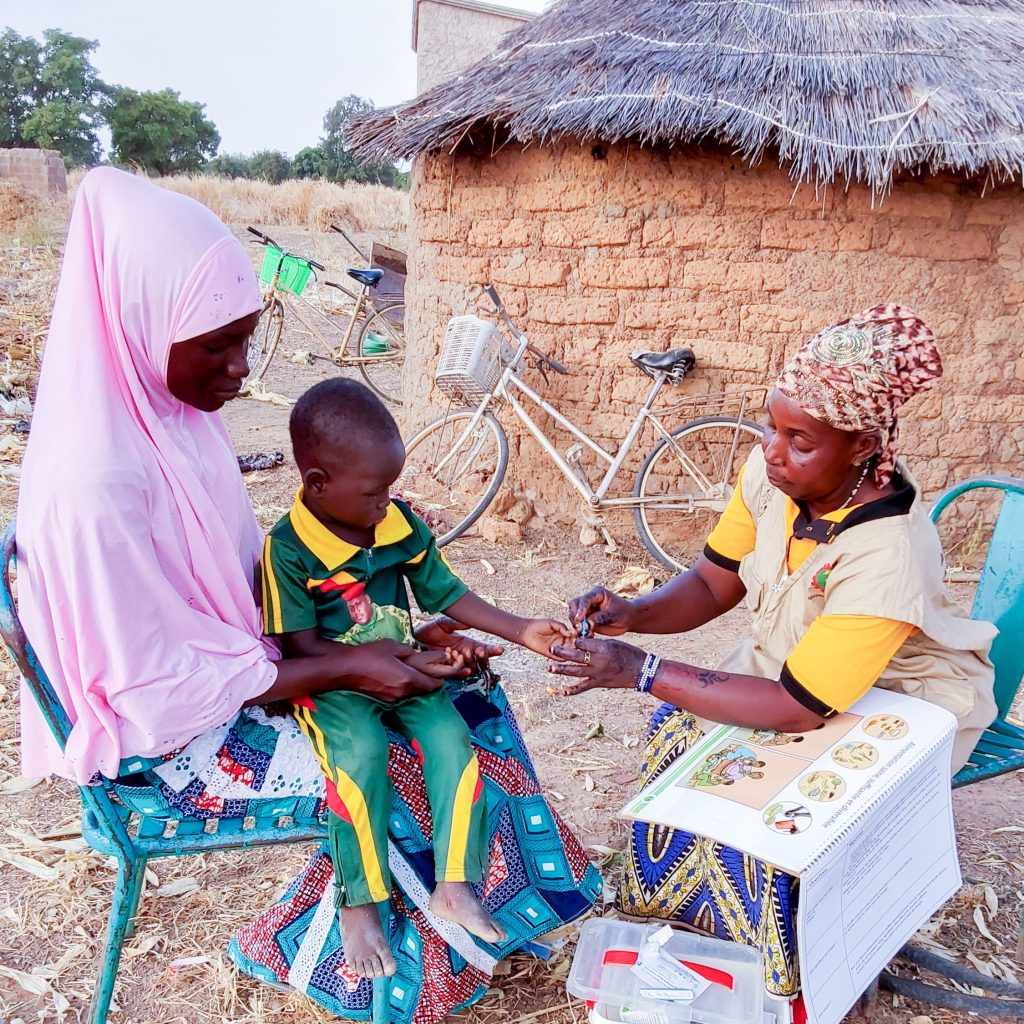
In this community, which also hosts more than 20,000 internally displaced people, Fatimata and other CHWs are a lifeline for families.
They diagnose, treat, and educate those who need their support, often with no means of transportation. Despite these challenges, their determination remains unshakable.
Zénabo Sawadogo, a mother of a 10-month-old baby, is one of the many women who have benefited from CHWs’ services. “My child was suffering from malnutrition. The health workers helped me so much. They taught me how to prepare nutritious porridge, choose the right ingredients, and protect my baby from malaria. Thanks to their advice and guidance, my child is now healthy,” she says with a smile.
The CHWs continue to visit her regularly, providing mosquito nets and practical advice to help prevent malaria, especially during the rainy season, when children are most at risk.
Share:


