
Posted on: October 27, 2025
The study on enhancing the effectiveness of integrated community case management (iCCM) for childhood illnesses in Busia County, Kenya, through the DESC approach—Digitally enabled, Equipped, Supervised, and Compensated is advanced by Living Goods in partnership with Kenya’s Ministry of Health and Busia County government.
It proves to be a lifesaving and cost-effective investment for managing common childhood illnesses and infectious diseases, in the end easing the burden on health facilities.
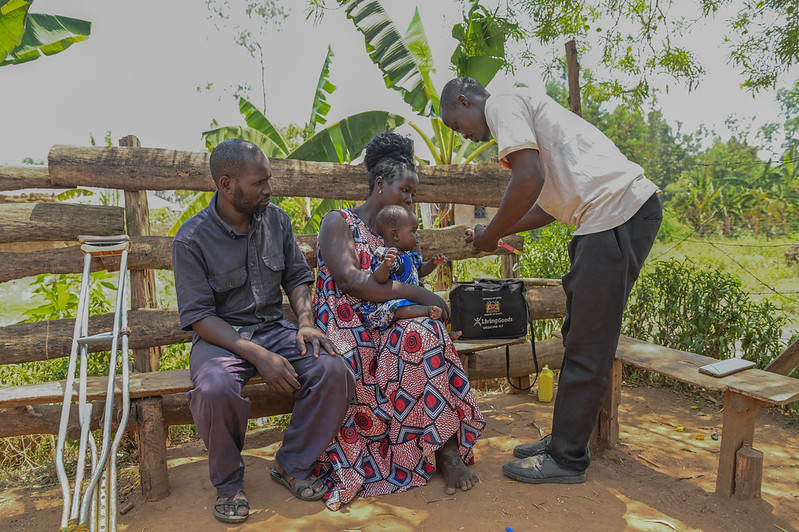
A Model Built on Professionalizing CHWs
Community Health Promoters (CHPs) were empowered with digital tools and essential resources, while being provided with proper supervision and fair compensation. This comprehensive support system enhanced motivation, strengthened accountability, and elevated the quality of care delivered to the most vulnerable populations.
In Namable sub-county in Busia County, iCCM was implemented with remarkable results.
Access to care-seeking, treatment options, and coverage for the three leading killers of children under five—malaria, pneumonia, and diarrhea—were significantly expanded through this innovative approach.
Technology and Real-Time Data Transforming Lives and Enhancing Accountability
Mobile health applications now guide CHPs through evidence-based protocols, supporting structured disease assessment and treatment decisions while systematically checking for danger signs. Real-time performance dashboards enable supervisors to monitor progress and provide immediate coaching.
This digital foundation, combined with refresher training and performance-based incentives, ensures consistent motivation and continuously improved data quality.
Results demonstrate dramatic improvements for example timely care-seeking has increased significantly—56% of caregivers now seek pneumonia care the same day symptoms appear in intervention areas, compared to just 35% in comparison sites. Community-level disease management has been revolutionized, with CHPs now managing 38% of malaria cases, 19% of pneumonia cases, and 25% of diarrhea cases—compared to only 16% of malaria cases, 3.7% of pneumonia cases, and virtually no diarrhea cases in comparison sites.
Reshaping Healthcare Access
The burden on facility-based care was meaningfully reduced through this approach. Government facilities now handle 42% of acute respiratory infection cases in intervention areas, down from 62% in comparison sites. Private facility utilization dropped from 12.2% to just 1.9%, indicating that CHW expanded access to quality care closer home.
Most importantly, trust has been rebuilt. Caregivers consistently report that CHPs are perceived as reliable, trustworthy, and accessible—fundamentally strengthening confidence in community health services, the foundation of Universal Health Coverage.
Call to Action
These outcomes demonstrate that the DESC-supported iCCM model represents more than an intervention. It is a scalable, cost effective and equity-driven approach to primary health care. For governments and partners the opportunities are clear:
- Prioritize and finance CHW by progressively integrating training, salaries, supplies, and supervision into national and sub-national budgets and systems.
- Institutionalize iCCM within the essential service packages in national community health policies.
- Secure long-term domestic resources with donors aligning to government-led-priorities and costed roadmaps.
- Invest in robust data and accountability systems to track performance, efficiency and build trust in financing.
Through government leadership, aligned donor support, and strong accountability iCCM can deliver on its promise; saving lives, strengthening health equity and driving UHC in resource constrained settings.
Read the full study here.
Share:


