

Posted on: April 24, 2026
Boyani A Village, Vihiga County, Kenya — The sun was beginning to set over the rolling hills of Vihiga when the fever took hold of four-year-old Ryvine. It started as a dull lethargy, but by nightfall, the boy was burning to the touch, his appetite gone, his strength replaced by the shivering tremors of a disease that has claimed too many children in this corner of Kenya.
In many parts of the world, a child’s fever is a stressful inconvenience. In rural Kenya, it is a race against time.
Ryvine’s caregiver sat in the dim light of their home, caught in the agonizing “wait and see” cycle that often precedes tragedy. But then, she remembered a neighbor who doesn’t just live in the village but protects it. She called Lidia Mmbone.
The Power of Proximity
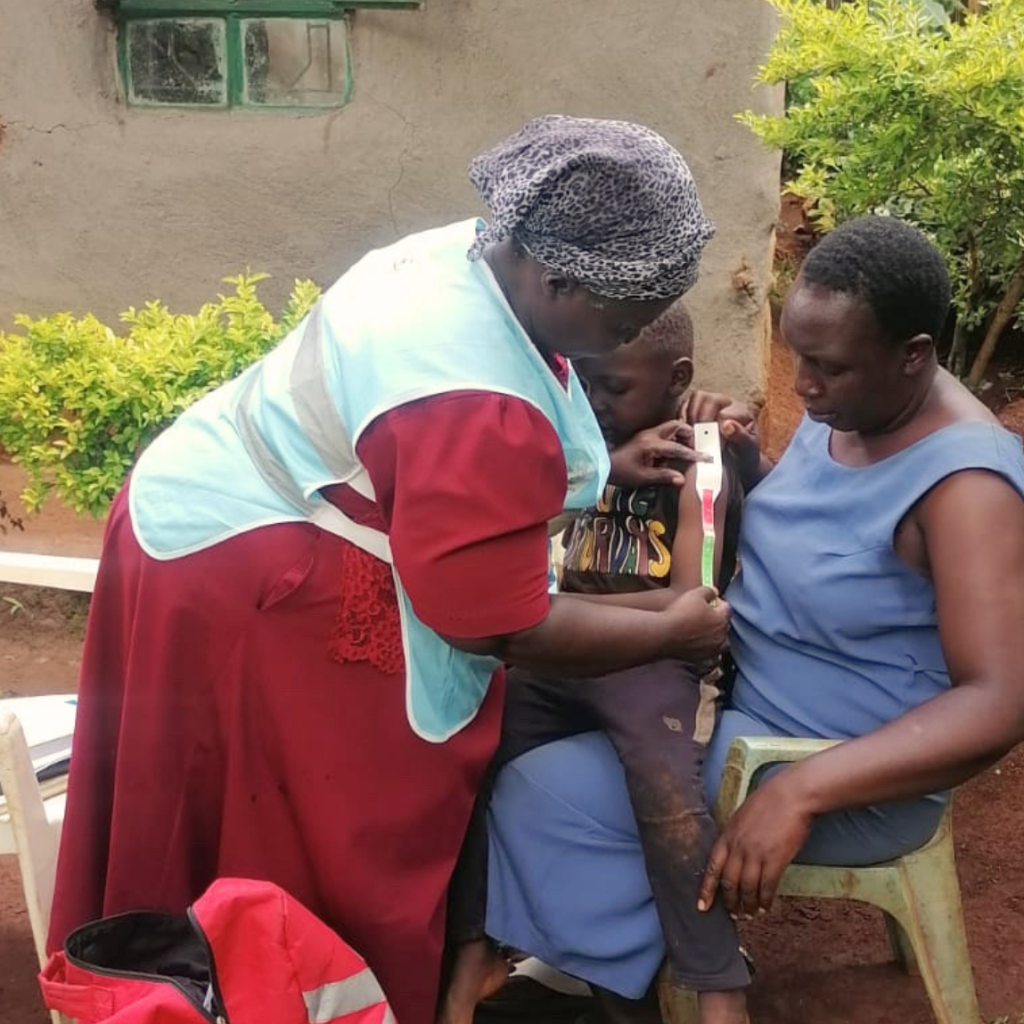
Lidia is a Community Health Promoter (CHP), but to the families in Boyani A Village, she is a lifeline. When she arrived at Ryvine’s bedside, she didn’t just bring medicine; she brought a mobile laboratory in her kit and years of trust in her presence.
Within minutes, Lidia performed a Rapid Diagnostic Test. The two red lines were unmistakable: Malaria.
“Lidia came at the right time,” Ryvine’s caregiver recalls. “I didn’t know how serious it was, but she acted quickly. She didn’t just treat him—she stayed with us through the process.”
Because Lidia arrived within the critical 24-hour window, she was able to administer antimalarials on the spot. No expensive journey to a distant hospital. No long lines. Just care, delivered at the doorstep.
The Big Picture: Kenya’s Quiet Revolution
Ryvine’s recovery is part of a much larger, hopeful data point. Across Kenya, the fight against malaria is being won not just in high-tech labs, but on the unpaved lanes of villages like Boyani A.
-
Progress by the Numbers: Between 2023 and 2025, malaria incidence in Kenya declined by 5%.
-
A Decade of Impact: National prevalence has dropped from 8% to 6% over the last ten years.
-
Saving Lives: Malaria-related mortality plummeted by 32% in the previous strategy cycle.
This progress is fueled by a “digital-first” approach. Using tools like eCHIS (Electronic Community Health Information System), CHPs like Lidia can monitor seasonal prevention and ensure that insecticide-treated bed nets are not just delivered, but used correctly.
More Than a Cure
For Lidia, the job wasn’t over when Ryvine’s fever broke. True health equity means moving from treatment to transformation. She spent the following days teaching the family how to clear mosquito breeding sites and ensuring their bed nets were tucked in every night.
“She is a blessing,” the family says. But Lidia would say she is simply a neighbor with the right tools.
Join the Fight
This World Malaria Day, we celebrate the “Lidias” of the world—the frontline heroes who prove that the end of malaria is within our reach.
Progress is possible, but it is not inevitable. It requires the sustained support of governments, the integration of digital health tools, and the belief that no child’s life should be determined by their zip code.
This April 25, let’s commit to reaching every door. Because when care arrives at the right time, a child like Ryvine gets to have a tomorrow.
Share:


