

Posted on: March 11, 2026
In many communities, access to healthcare depends on the strength of the community health system. When community-based health workers are well supported, supervised, and equipped to do their jobs, families receive care earlier, illnesses are treated faster, and health facilities are less overwhelmed. This is why the Ministry of Health, through the Directorate of Community Health, tested a new performance management approach in the Ziniaré health district and why the results go far beyond the pilot itself.

From July to December 2025, a new supervision model was tested to strengthen the support provided to Community-Based Health Workers (ASBC). This approach reinforced the role of Community Health Workers (ASC) in coaching and performance monitoring, ensuring that frontline workers receive regular supervision, constructive feedback, and continuous follow-up in their work serving communities.
The pilot project was implemented in 11 health facilities, where 11 Community Health Workers supervised 122 Community-Based Health Workers, with technical and financial support from Living Goods. The goal was simple but essential: improve performance, strengthen accountability, and ensure that communities receive regular, high-quality health services.
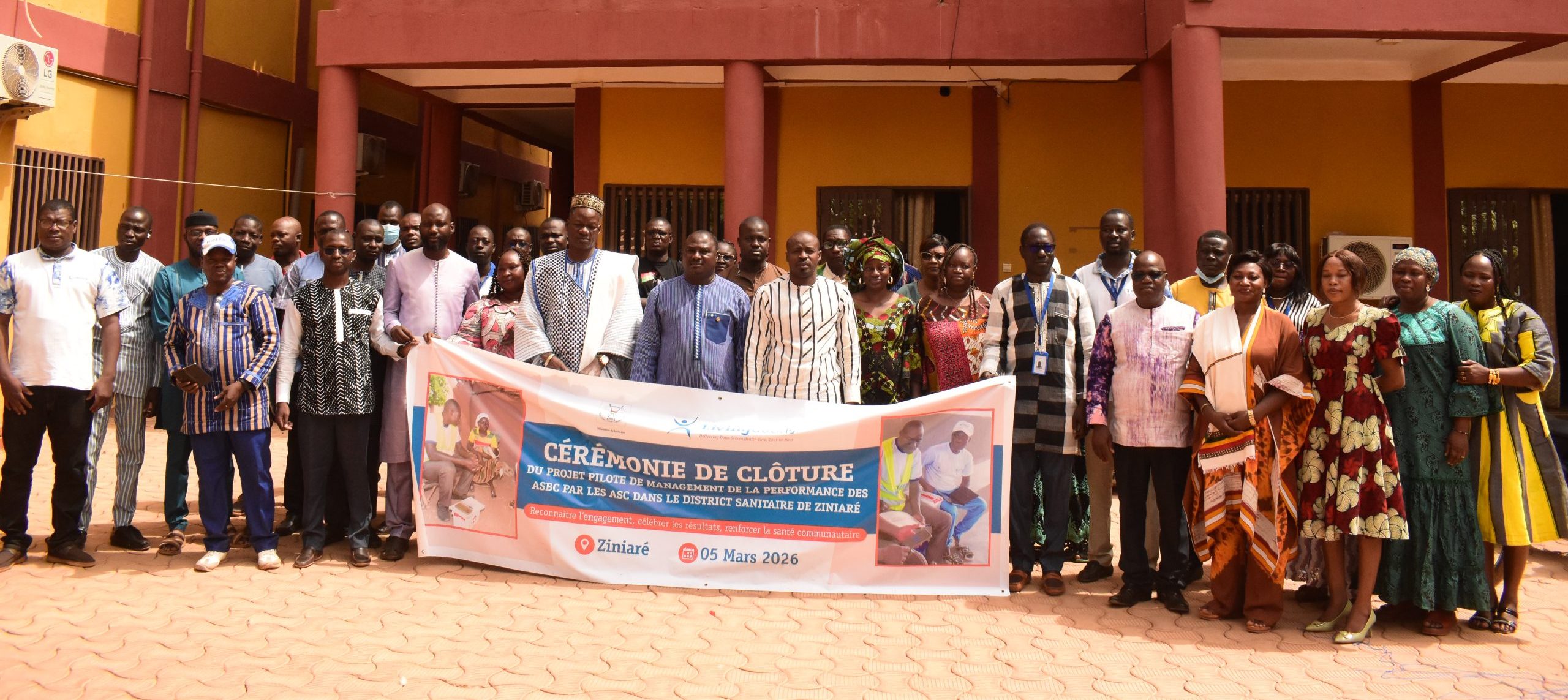
On March 5, 2026, stakeholders gathered in Ziniaré to officially close the pilot phase and reflect on the lessons learned. The ceremony, chaired by the Provincial High Commissioner, Mr. Guigma Saidou, brought together actors from all levels of the health system, including representatives from the Regional Health Directorate, the Ziniaré health district, Community Health Workers, head nurses, local authorities, and representatives from the Directorate of Community Health. His Majesty Naaba Sanem, chief of Ziniaré, also honored the ceremony with his presence, reminding participants that the strength of the community health system depends on collaboration from all.
One conclusion clearly emerged from the pilot: when supervision is regular and structured, performance improves — and communities benefit directly.
During the pilot phase, 90% of Community-Based Health Workers received monthly supervision, and 90% met their monthly performance targets. Performance indicators were maintained, and in some cases even improved, throughout the six-month period. These results show that when frontline workers are well supported, they are better able to provide the services families need.
But the numbers tell only part of the story.

For community health workers themselves, the change meant a better understanding of their role and more effective support in the field. Roger Ilboudo, Community Health Worker in Bendogo, welcomed the results of the initiative:
“We greatly appreciate this strategy. It helped us better understand our role and better support community-based health workers in their activities for the benefit of the population.”
At the health facility level, the impact is also visible. Aïssatou Zongo, head nurse at the Tamporin health center, explains that improved supervision is already being felt in the communities they serve:
“This innovation has helped improve the performance of community-based health workers. Today, we are even seeing a reduction in certain cases at the health center thanks to the work done upstream in the communities.”
These changes illustrate the real goal of strengthening performance management not only improving indicators but ensuring that care reaches people earlier and closer to where they live.
The pilot also showed that innovation in community health depends on partnership. The initiative was led by the Ministry of Health through the Directorate of Community Health, with support from Living Goods, which provided technical and financial assistance throughout the pilot and reaffirmed its commitment to supporting the next phase, including strengthening the logistical resources needed for field supervision.
During the closing ceremony, the Provincial High Commissioner, Mr. Guigma Saidou, praised the collective effort that made the results possible:
“The results achieved belong to all the actors. Words are not enough to express my gratitude to each of you, as well as to Living Goods for its support. My thanks also go to the Directorate of Community Health for its commitment to this process.”
As the pilot phase concludes, the next steps will focus on final evaluation, documenting lessons learned, and preparing for scale-up.
The experience in Ziniaré shows that with the right supervision, regular support, and strong collaboration, it is possible to sustainably strengthen the community health system — and ultimately improve the health of communities.
Share:


1 Comments
CHEICK OUMAR OUEDRAOGO
March 12, 20268:27 pm
Congrats