

Posted on: November 4, 2026
A digital alert can identify a child who missed a health referral. But whether that child receives care depends on what happens next. Someone must contact the family and confirm that treatment happened, and follow up as needed. Digital transformation succeeds only when the health system can complete that response, consistently and affordably.
This Digital Health Week, the theme “Digital Transformation for UHC: Coordinate, Act, Accelerate” sets a practical challenge. Universal health coverage means people can both access needed quality services and so without financial hardship. For community health, progress requires connecting digital investments to the everyday work that makes timely care possible.
Burkina Faso
In Burkina Faso, experience shows that digital transformation requires reliable information, teams equipped to interpret it, and practical support to resolve problems. When a community health review in Ziniaré flagged an apparent decline in services, district leaders and partners looked deeper. Health workers were still delivering care, but broken phones and synchronization problems left gaps in the digital record. Living Goods helped repair devices, recover unsynchronized data and coach health workers, helping restore the information teams needed to guide decisions and support care.
Kenya
In Kenya, Living Goods’ Supervisor App turns community health data into prioritized tasks, helping supervisors identify missed care and support frontline workers to follow up. Teams using the tool have reported postnatal care coverage rising from approximately 60% to 85%. These early results point to the value of connecting information to action. Sustaining that progress requires the training, supportive supervision and reliable devices that recent research in three Kenyan counties also identified as important to effective digital system use.
Uganda
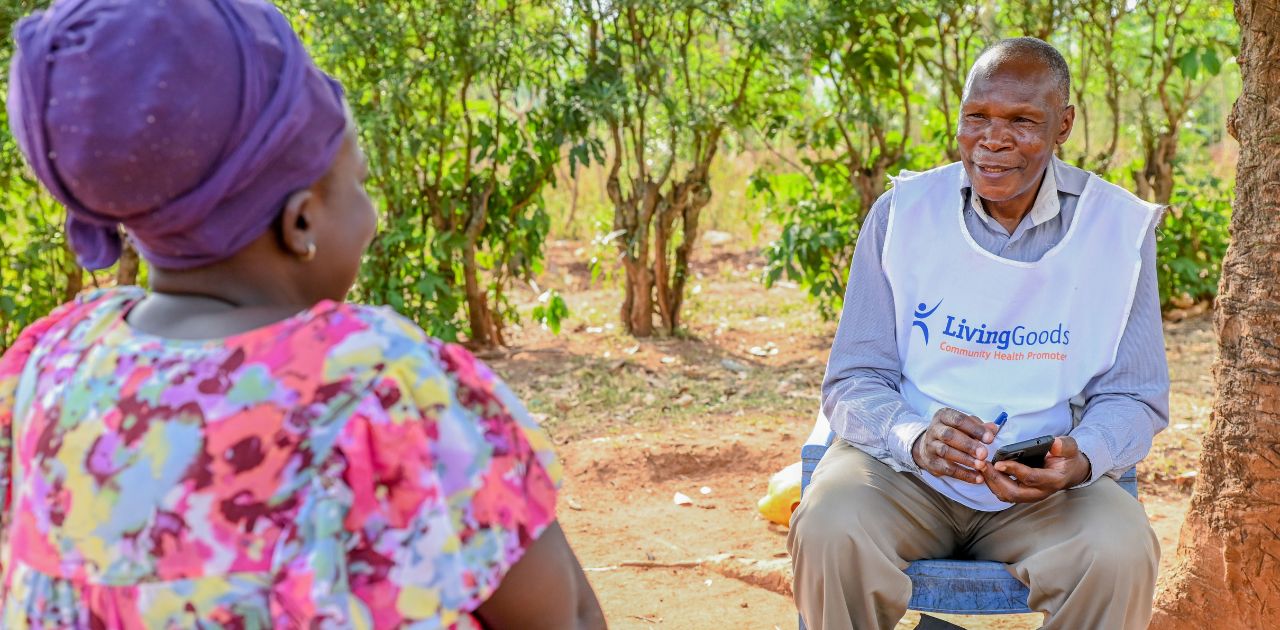
In Wakiso District, Uganda, district officials reported that community health reporting rates rose from 45% to 87.5% in one quarter following the introduction of the national electronic community health information system. For frontline worker Joyce Nankabirwa, the practical benefit was reminders to follow up with pregnant women and children due for immunization. Living Goods and partners supported the transition through digital tools, skills development and supervision. Better visibility becomes valuable when it helps health workers reach families who might otherwise miss care.
At Living Goods, we work alongside governments to make community health systems perform, at scale. Our experience points to three priorities for turning digital ambition into care families can count on.
- Coordinate around government leadership
Governments need oversight over how digital systems work, how partners contribute, and how information moves between community and facility care. Partners should build within those national priorities, with clear responsibility for maintenance, data protection, and long-term financing. Coordination must reach the team resolving a technical problem and the supervisor ensuring households that need urgent attention receive it.
- Act on what the data reveals
Collecting information is only the beginning. A record of a missed postnatal visit should trigger a follow-up. A referral should have a named person responsible for checking completion. Supervisors need practical priorities, alongside the capacity to help health workers resolve problems.
That means agreeing on who receives an alert, what action they should take, and how they will confirm that the patient received care. Teams also need a way to escalate problems they cannot resolve, whether a broken device, unavailable medicine, or a family struggling to reach a facility.
- Accelerate what governments can sustain
Affordability must shape digital systems from the start. Governments need to budget for devices, connectivity, repairs, hosting, and the people who keep services working. Medic’s new Community Health Toolkit hosting calculator offers a useful contribution, while explicitly separating hosting from other essential costs. A sustainable budget must cover the whole service.
AI creates opportunities to extend limited capacity: helping prioritize follow-up, tailor learning, and handle routine supervisory tasks. Living Goods is developing CareLoop to connect families seeking advice with appropriate care and follow-up. These approaches need evaluation within government systems, with human oversight and accessible channels for people using basic phones or local languages.
Governments, funders and technology partners should measure progress through completed referrals, timely visits and continuity of care, alongside cost and equitable access. Investing in the teams and routines behind those results will help digital transformation endure as systems grow. Funders can reinforce this by financing ongoing operations and government capability, with clear plans for who will manage the service and meet its recurring costs after initial project funding ends.
Coordinate around government priorities. Act on missed care. Accelerate approaches that countries can afford and sustain. That is how digital investments can help fulfil the promise of universal health coverage: so that when families need healthcare, it is there.
Share:


